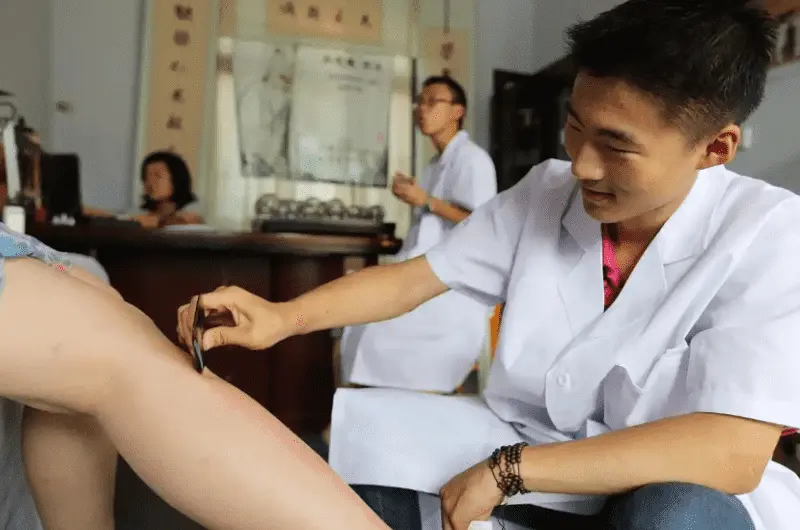
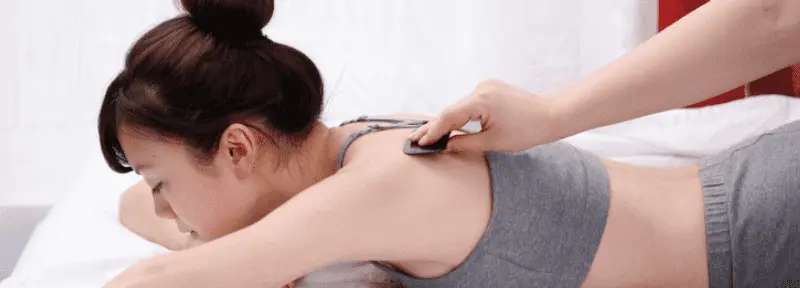
Gua sha: how this gentle TCM practice supports bodily balance
The well-known TCM saying goes: when circulation flows freely, there is no discomfort; when flow is blocked, discomfort arises. In the framework of TCM, stagnation along the meridians can create feelings of unease. This idea is the foundation behind gua sha, and it explains why the temporary marks we see after practice appear.
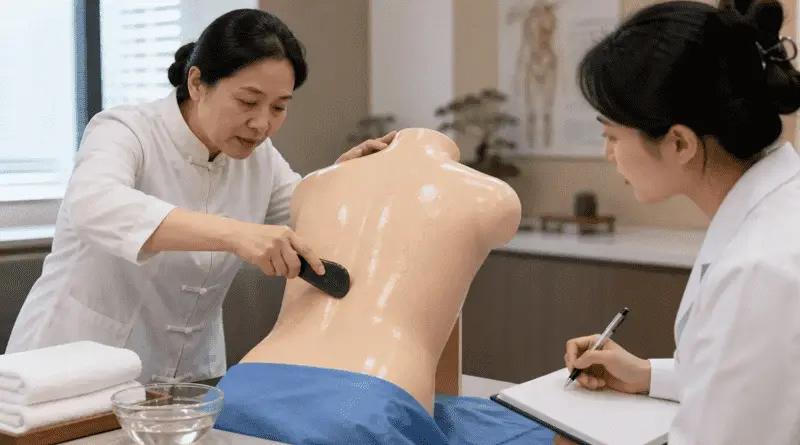
One key way gua sha works is through mild nerve stimulation. When we gently stroke specific meridian areas with a gua sha tool, the surface nerve receptors pick up this soft pressure. These signals travel through the nervous system, helping the body adjust and move toward a more balanced state. This simple feedback loop is one of the core self-care mechanisms of gua sha.
A second effect comes from gentle warmth in the treated area. The gliding motion of gua sha encourages tiny blood vessels near the skin’s surface to widen. Local blood flow increases, which supports the body’s natural renewal process for soft tissue. This supports your body’s normal, healthy circulation cycle.
It is important to remember that gua sha is a traditional external self-care ritual. It works with your body’s own systems to nurture balance, rather than as a medical intervention. Many people add gua sha into their weekly wellness routine to encourage smoother flow and ease tension.